Destination Vietnam
Destination
Vietnam
Lotus Icon

Travel to Vietnam: guide to preparing your trip

Why Vietnam?

Hang BUI

Editorial by

Hang BUI, co-founder & travel designer

For nearly two decades of walking the back roads, paved courtyards of ancestral estates, and secret waterways of my homeland, Vietnam has never ceased to inhabit my soul with the same fervent devotion. Crafting an exceptional journey here is far more than a logistical equation: it is an act of pure hospitality, a solemn invitation to enter the intimacy of a multi-millennial civilization of overwhelming dignity and poise.

Vietnam is not simply visited; it is experienced. Every vibrant alley of Hanoi, every fleeting smile, and every fragrance of incense will tell you the soul of a fascinating country.

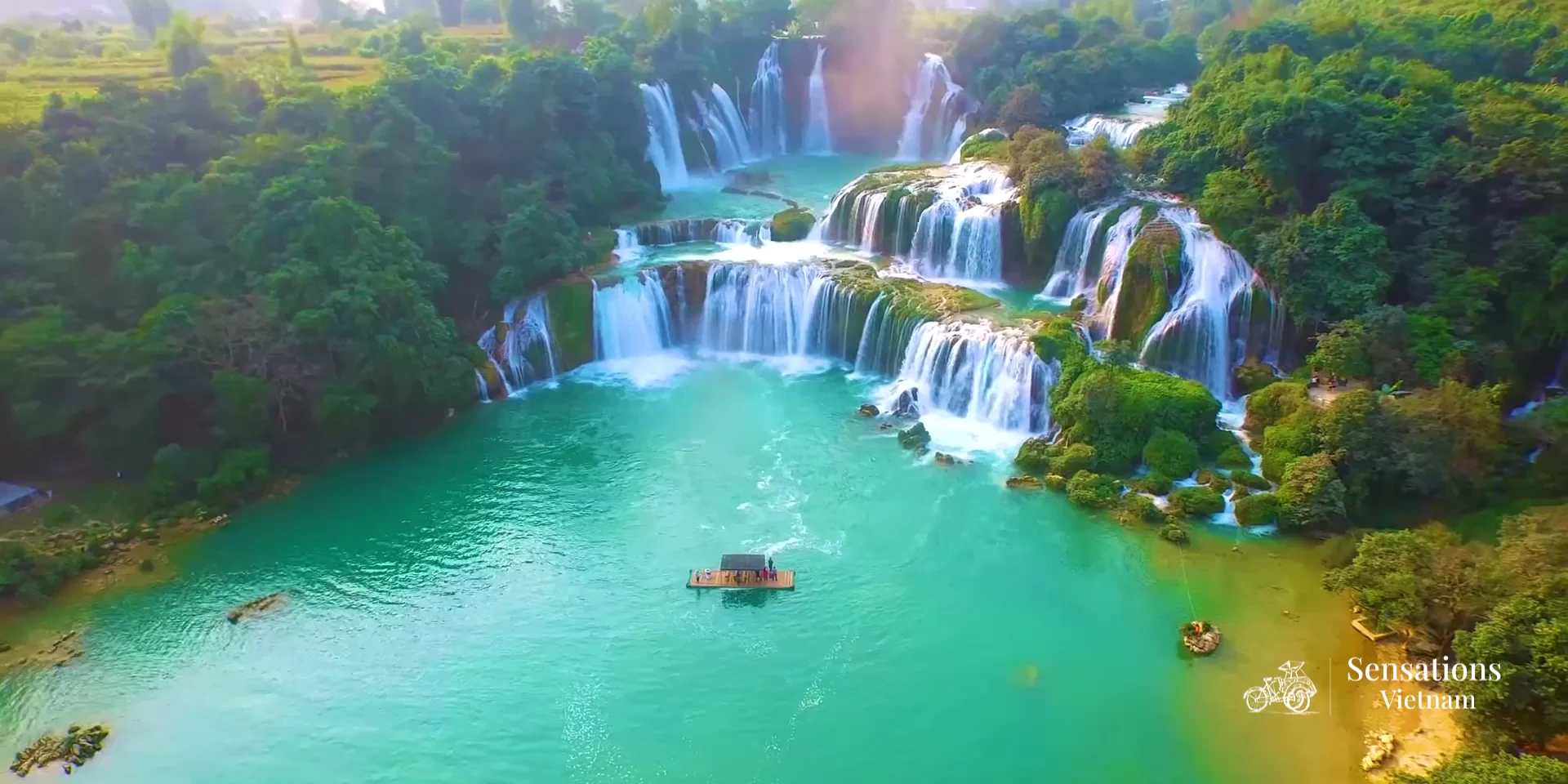
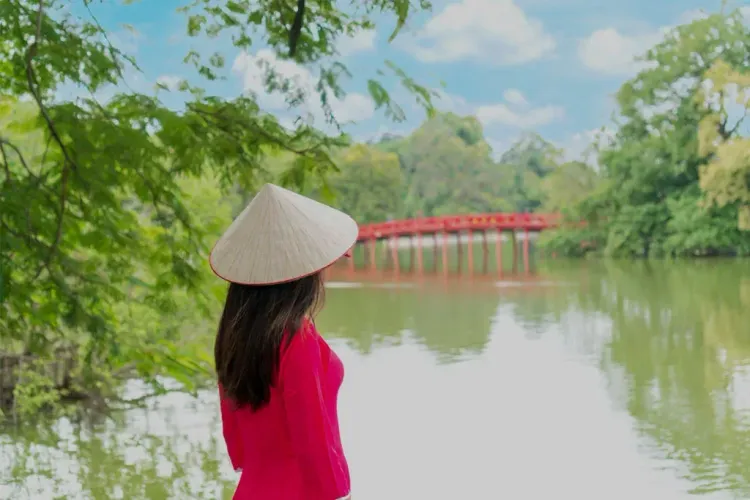
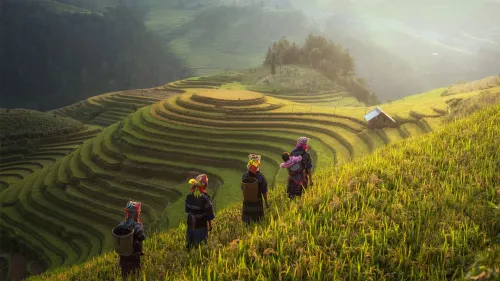
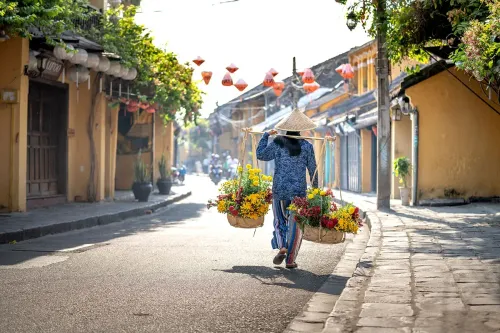
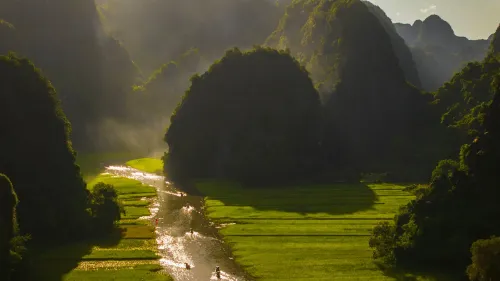
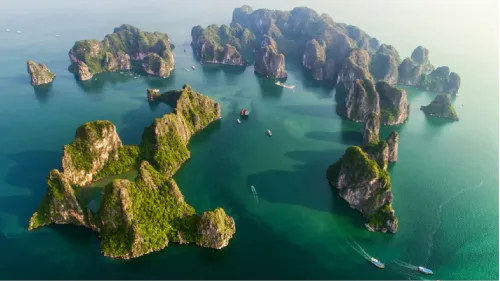
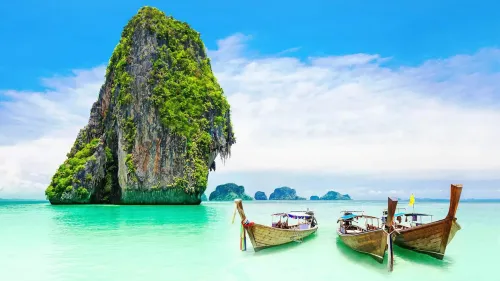
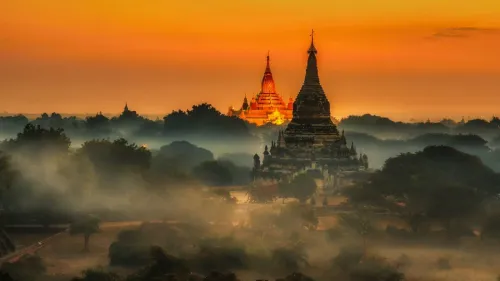
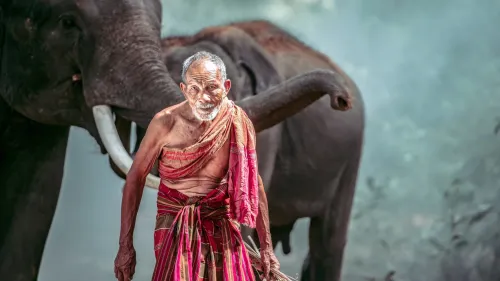
Travelers setting foot on our land for the first time often anticipate a dramatic canvas of limestone karsts rising from sea mists and conical hats drifting beside emerald rice paddies. Yet the true essence of Vietnam lies infinitely deeper. It dwells in the silent dignity of elders whose eyes carry centuries of History, in the serene devotion of pagodas drifting with the scent of agarwood, in the weathered architectural elegance of old mandarin residences, and in the delicate sophistication of a cuisine that elevates the humblest wild herb to a sensory masterpiece.

Through this exclusive guide, born of eighteen years of uncompromising passion, I open the doors to a sovereign and confidential Vietnam. From the mineral North and its mist-shrouded peaks to the languid waterways of the Mekong Delta, passing through the poetic grandeur of imperial Annam, I invite you on a journey where every moment is designed to awaken genuine emotion, far off the beaten track and away from tourist pretenses.

North, Central, South

Where to go in Vietnam?

Select a destination to locate it immediately on our interactive map.

North

Historic capitals, terraced rice fields, and spectacular mountain landscapes.

Central

Imperial heritage, historic port towns, and a coastline blending culture with gentle living.

South

Urban vitality, the Mekong Delta, and tropical islands ideal for unwinding.
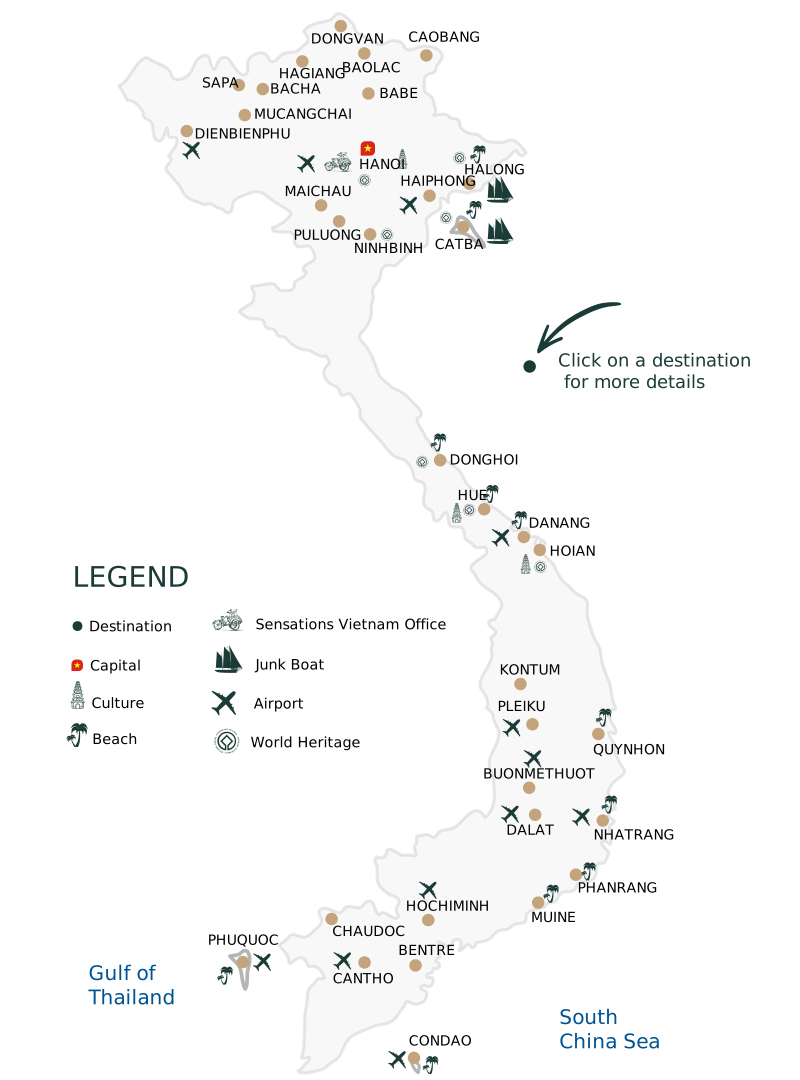
Click on a destination for more details
Destination map of Vietnam

Hanoi

NorthCultureHistoryCapital
Hanoi image 1
Millennial capital where French colonial architecture blends harmoniously with ancient pagodas and the ceaseless vitality of the Old Quarter.

THE ESSENTIALS

When to Go?

October to December (autumn) and March to April.

Recommended Duration

2 to 3 days.

Key Experiences

Street food, Old Quarter, colonial architecture, thousand-year-old culture.

Atmosphere

Bustling, nostalgic, and deeply cultural.

Choose your pace

How many days should you plan to visit Vietnam?

From a focused getaway to an in-depth journey, choose a duration tailored to the regions you wish to connect and the pace you enjoy.

  1. 10 days

    A focused glimpse

    Focus on one major region or a curated selection of complementary destinations.

    Suggested pace

    A dynamic tempo for a first discovery without accumulating lengthy travel legs.

  2. Recommended

    15 days

    The ideal balance

    Connect two to three regions and experience multiple facets of the country without rushing.

    Suggested pace

    A comfortable tempo, balanced between discoveries, encounters, and moments to breathe.

  3. 21 days

    Vietnam in depth

    Travel the country from North to South, leaving generous room for scenic detours and remote regions.

    Suggested pace

    A gentler tempo to delve deeper into every stop and travel with greater freedom.

Lotus Icon

Key advice to prepare your trip to Vietnam

  • ✦
    Neighboring Countries: China to the north, Laos and Cambodia to the west, and the East Sea (South China Sea) to the east.
  • ✦
    Area: 331,041 km²
  • ✦
    Population: Approximately 102.2 million (2026 estimate)
  • ✦
    Capital: Hanoi
  • ✦
    Time Zone: GMT+7 hours. (Vietnam does not observe daylight saving time).
  • ✦
    Religions: Buddhism, Catholicism, Caodaism, Hòa Hảo, Protestantism, Islam, and indigenous folk beliefs.
  • ✦
    Language: Vietnamese
  • ✦
    Currency: Vietnamese Dong (VND). Approximate exchange rate: 1 EUR ≈ 30,000 VND and 1 USD ≈ 26,000 VND. (Exchange rates are subject to fluctuation).
  • ✦
    Power Plugs: 220V / 50Hz. Types A, C, and F plugs are widely used. An adapter may be required depending on your country of origin.

Last updated: August 2026


Visa Exemptions
Citizens of 25 countries benefit from visa exemption, valid at all official international border checkpoints.

  • ✦
    Up to 90 days: Chile
  • ✦
    Up to 45 days: United Kingdom, Sweden, Spain, South Korea, Russia, Panama, Norway, Japan, Italy, Germany, France, Finland, Denmark, Belarus.
  • ✦
    Up to 45 days (valid until August 14, 2028): Belgium, Bulgaria, Croatia, Czech Republic, Hungary, Luxembourg, Netherlands, Poland, Romania, Slovakia, Slovenia, and Switzerland.
  • ✦
    Up to 30 days: Thailand, Singapore, Malaysia, Laos, Kyrgyzstan, Indonesia, Cambodia.
  • ✦
    Up to 21 days: Philippines
  • ✦
    Up to 14 days: Myanmar, Brunei

Conditions:

  • ✦
    The traveler's passport must be valid for at least six months beyond the date of arrival in Vietnam.
  • ✦
    Travelers entering under this exemption must present a confirmed return or onward ticket.
  • ✦
    Holders of British National (Overseas) — BNO — passports are not eligible for visa exemption and must apply for a visa.
  • ✦
    Holders of the APEC Business Travel Card (ABTC) with a valid passport are exempt from visa requirements for stays up to 60 days.
  • ✦
    The visa-free stay period is calculated starting from the official date of entry.

Electronic Visa (E-Visa) – 25 to 50 USD
E-Visas are available to citizens of 199 countries. They are intended for travelers who:

  • ✦
    Do not belong to the list of visa-exempt countries.
  • ✦
    Originate from visa-exempt countries but seek a multiple-entry visa.
  • ✦
    Originate from visa-exempt countries but wish to extend their stay beyond the exempted duration.

E-Visas are accepted at 13 international airports, 16 land border crossings, and 13 sea border gates across Vietnam. They are valid for stays of up to 90 days.

  • ✦
    Single entry: 25 USD
  • ✦
    Multiple entries: 50 USD

WARNING: FRAUDULENT E-VISA WEBSITES EXIST. PLEASE USE THIS OFFICIAL LINK TO PREVENT SCAMS. Applications must be processed through the official government portal: https://evisa.gov.vn/

Mandatory Pre-Arrival QR Form (Tan Son Nhat International Airport) International travelers arriving at Tan Son Nhat Airport (Ho Chi Minh City) must complete a digital pre-arrival QR declaration. The generated code must be presented at immigration checkpoints via: https://prearrival.immigration.gov.vn/

Last updated: August 2026


International and domestic flights operated by the national carrier (Vietnam Airlines) generally include an allowance of 23 kg for checked baggage and 10 to 12 kg for cabin baggage (depending on destination and aircraft type). For low-cost carriers such as VietJet Air, checked baggage is typically not included in standard fares. Please consult your e-ticket or airline website for detailed allowances and excess baggage fees.

Last updated: August 2026


Vietnam experiences distinct regional climate variations. Here is an overview to help you plan your journey:

ANNUAL WEATHER CALENDAR

VIETNAM Jan Feb Mar Apr May Jun Jul Aug Sep Oct Nov Dec
North ❄️ ❄️ 🌤️ 🌤️ 🌧️ 🌧️ 🌧️ 🌧️ 🌧️ ☀️ ❄️ ❄️
Central 🌤️ ☀️ ☀️ ☀️ ☀️ ☀️ ☀️ ☀️ ⛈️ ⛈️ ⛈️ 🌧️
South ☀️ ☀️ ☀️ ☀️ 🌧️ 🌧️ 🌧️ 🌧️ 🌧️ 🌧️ 🌧️ ☀️

Legend: ☀️ Sunny and dry | 🌤️ Changeable weather | 🌧️ Rainy season | ⛈️ Typhoon risk | ❄️ Cool season


DETAILS BY REGION:

  • ✦
    The North: From May to September, summers are hot and humid with occasional showers. Winters, from December to February, are cool and dry—the best time to explore mountainous landscapes. Spring and autumn offer pleasant temperatures, with spring blossoms making it ideal for outdoor adventures and cultural festivals.
  • ✦
    The Center: Defined by a tropical monsoon climate. The rainy season runs from September to December, featuring heavy precipitation and occasional typhoons. From January to August, the dry season is warm and sunny, making it prime time for coastal retreats. Weather can vary between the northern and southern parts of the central region.
  • ✦
    The South: The weather is generally milder. From December to April, the dry season brings warm temperatures and minimal rainfall (ideal for Ho Chi Minh City and the Mekong Delta). The wet season, from May to October, brings occasional heavy showers, especially from June to August. Despite the rain, this is when the Mekong floating markets are at their liveliest.

Last updated: August 2026


Arriving in Vietnam by Air Vietnam is easily accessible by air, with direct and connecting international flights from Asia, Europe, Australia, and North America.

  • ✦
    Noi Bai International Airport (HAN) – Hanoi: 25 km from the city center. Transfer time: 45–60 minutes.
  • ✦
    Phu Bai International Airport (HUI) – Hue: 13 km from the city center. Transfer time: 20–30 minutes.
  • ✦
    Da Nang International Airport (DAD) – Da Nang: 4 km from the city center. Transfer time: 10–20 minutes.
  • ✦
    Cam Ranh International Airport (CXR) – Nha Trang: 30 km from the city center. Transfer time: 35–45 minutes.
  • ✦
    Tan Son Nhat International Airport (SGN) – Ho Chi Minh City: 6 km from the city center. Transfer time: 30–60 minutes, depending on traffic.
  • ✦
    Phu Quoc International Airport (PQC) – Phu Quoc: 10 km from the city center. Transfer time: 15–25 minutes.

Overland Entry into Vietnam Vietnam shares borders with China, Laos, and Cambodia, offering several international border gates open to foreign travelers.

  • ✦
    China: Mong Cai, Huu Nghi, Dong Dang, Lao Cai
  • ✦
    Laos: Cau Treo, Cha Lo, Lao Bao, Tay Trang, Na Meo, Nam Can, Bo Y
  • ✦
    Cambodia: Moc Bai, Tinh Bien, Vinh Xuong, Xa Xia, Thuong Phuoc Please note that visa requirements vary by nationality and point of entry. Always verify current regulations before departure.

Domestic Flights Domestic flights are the fastest way to travel across Vietnam. The three main carriers (Vietnam Airlines, VietJet Air, and Bamboo Airways) operate frequent connections between major cities and popular tourist hubs.

Train Travel The Vietnamese railway network connects many key destinations and offers a scenic, comfortable journey, especially on overnight sleeper trains. Popular lines: Hanoi – Lao Cai (Sapa); Hanoi – Hue; Hanoi – Da Nang; Ho Chi Minh City – Da Nang; Hanoi – Ho Chi Minh City (The Reunification Express).

Road Travel / Private Vehicle & Bus Long-distance buses connect most provinces and towns. An expanding modern expressway network has notably reduced travel times, although journeys may still be subject to traffic and road conditions.

Urban Transportation Grab is the most popular ride-hailing app in Vietnam, operating in major cities. Travelers can book private cars or motorbikes, view fares in advance, and pay seamlessly in cash or by credit card.

Last updated: August 2026


Greetings and Social Interactions

  • ✦
    Knowing a person's age before their profession or wealth is essential in Vietnamese culture, as it determines appropriate social honorifics and forms of address. Being elder is viewed with immense respect, and politely inquiring about someone's age is common and warmly received.

In Public

  • ✦
    Always ask permission before taking photographs of local people, especially in rural hamlets and highland minority villages.
  • ✦
    Keep a calm smile. Raising your voice or showing anger while bargaining will not yield results. Culturally, Vietnamese people value emotional restraint and composure to preserve face.
  • ✦
    Overt physical displays of affection between partners are considered inappropriate in public. Discretion is greatly appreciated.

Visiting Temples and Pagodas

  • ✦
    Remove your shoes and socks before entering a religious site. Leave them at the entrance and walk barefoot inside.
  • ✦
    Dress modestly with clothing that covers both shoulders and knees. Long, lightweight trousers or maxi skirts are strongly recommended.
  • ✦
    Do not wear hats or caps inside temple sanctums.

Homestays and Dining with Locals

  • ✦
    When giving or receiving items, gifts, or business cards, always use both hands as a sign of mutual respect.
  • ✦
    Never stick your chopsticks upright into a bowl of rice. This posture mimics incense burning in an ancestral altar during funeral rites.

Ban on E-Cigarettes and Heated Tobacco (2025) Since 2025, the production, sale, and use of electronic cigarettes and heated tobacco products are strictly banned across Vietnam. Travelers must refrain from using, carrying, or distributing these products to comply with national law and avoid severe legal repercussions.

Last updated: August 2026


National Currency The sovereign currency is the Vietnamese Dong (VND). Average benchmark exchange rates: 1 USD ≈ 26,000 VND / 1 EUR ≈ 30,000 VND (Updated: August 2026).

Currency Exchange
Major currencies can be exchanged almost everywhere in Vietnam, in licensed shops and banks (Vietcombank, BIDV, Techcombank, etc.). Banks in major cities (Hanoi, Saigon) exchange foreign currencies and most traveler's checks.
BRING NEW BANKNOTES. ANY DAMAGED OR DIRTY NOTE WILL INCUR AN ADDITIONAL FEE OF TWO PERCENT OF ITS FACE VALUE.

ATMs and Credit Cards International cards (VISA, MASTERCARD) are accepted at most ATMs and merchant outlets. Using an international card incurs standard transaction fees. All cash dispensed at ATMs is in Vietnamese Dong.

Traveler's Checks
Only banks in major cities still accept them. We recommend having another means of payment.

Tipping Guidelines
Tipping is not part of Vietnamese tradition. However, it is becoming increasingly common in certain situations. You can tip your guide, porters, and taxi drivers; leaving a tip for waitstaff is unusual.

Temple Donations Donation boxes are placed near entrances and shrines for sanctuary upkeep. If vendor sellers invite you to pray with incense sticks, they will likely ask for payment in return.

Bargaining Bargaining is commonplace in traditional markets. Travelers should always remain respectful, good-humored, and courteous. Avoid aggressive haggling, and do not attempt to bargain in fixed-price establishments.

Last updated: August 2026


Here are emblematic Vietnamese specialties every traveler should discover:

  • ✦
    Vietnamese Coffee: An integral part of Vietnamese culture, available in many variations (coconut coffee, egg coffee, and coffee with condensed milk).
  • ✦
    Bánh Mì: A short baguette with a thin, crisp crust and a soft interior, filled with meat and flavorful ingredients (eggs, pâté, and fresh herbs).
  • ✦
    Phở: Vietnam's most famous dish: a soup of broth, rice noodles, herbs, and meat (beef or chicken), available everywhere and at any time.
  • ✦
    Bún Chả: Grilled fatty pork served over white rice noodles with herbs and a sweet-and-sour sauce on the side.
  • ✦
    Bánh Cuốn: Usually eaten for breakfast, this is a thin pancake of fermented rice batter filled with seasoned minced pork, wood-ear mushrooms, and finely sliced shallots. Served with pork sausage, cucumber, bean sprouts, and fish sauce for dipping.
  • ✦
    Xôi: Savory or sweet sticky rice. A quick breakfast and popular snack throughout the country, also eaten for lunch or dinner in some regions.
  • ✦
    Bún Bò Huế: A spicy rice noodle dish with sliced beef, pork sausage, and sometimes pork trotters.
  • ✦
    Bánh Xèo: A crisp, savory fried pancake made with rice flour, water, and turmeric powder, with a filling inside.

Last updated: August 2026


Duty-Free Import Allowances Travelers may bring the following items duty-free into Vietnam:

  1. For travelers aged 18 and older:
    • ✦
      Tobacco products: 200 cigarettes, 20 cigars, or 250 g of loose tobacco.
    • ✦
      Spirits (>20%): 1.5 liters; alcohol (<20%): 2 liters; other alcoholic and non-alcoholic beverages: 3 liters.
    • ✦
      Tea (up to 5 kg), roasted/ground coffee (up to 3 kg).
  2. Reasonable quantities of perfume and personal effects.
  3. Other taxable goods not exceeding a total value of 10,000,000 VND.

Prohibited Imports
Weapons, ammunition, explosives, military equipment, antiquities, drugs, toxic chemicals, immoral products, firecrackers, electronic cigarettes and heated tobacco, raw gold.

Prohibited Exports
Weapons, ammunition, explosives, military equipment, antiquities, drugs, toxic products, wild animals, endangered plants and animals, documents concerning national security, electronic cigarettes and heated tobacco, raw gold.

Inbound Currency Declaration:

  • ✦
    Local Currency (VND): Cash exceeding 15,000,000 VND must be declared.
  • ✦
    Foreign Currency: Cash exceeding 5,000 USD (or equivalent) must be declared. Amounts below 5,000 USD intended for deposit into credit institutions must also be declared upon arrival.

Outbound Currency Declaration:

  • ✦
    Local Currency (VND): Cash exceeding 15,000,000 VND must be declared.
  • ✦
    Amounts exceeding 5,000 USD (or equivalent) must be declared. Proof of expenditure is required.

Last updated: August 2026


Vaccinations
No vaccination is required for most travelers entering Vietnam. Proof of yellow fever vaccination may be required if you arrive from a country with a transmission risk (or have transited through it). Make sure your routine vaccinations are up to date (tetanus, diphtheria, polio, and measles). Depending on your itinerary, your doctor may recommend vaccinations against Hepatitis A, Hepatitis B, Typhoid, Japanese Encephalitis, or Rabies.

Health Tips

  • ✦
    Drink plenty of safe water and stay hydrated. Drink only bottled, boiled, or purified water. Avoid tap water.
  • ✦
    Wash hands regularly or use hand sanitizer.
  • ✦
    Eat freshly cooked foods served steaming hot. Wash or peel fresh fruits.
  • ✦
    Apply mosquito repellent to guard against dengue fever and other vector-borne diseases.
  • ✦
    Trust your instincts: busy street stalls with a high turnover of customers are often a good indication of freshness.

Vietnam introduced a new health declaration framework on July 1, 2026. We recommend checking the requirements before departure.

Last updated: August 2026


Your embassy can advise you in an emergency. Vietnamese emergency numbers (ask an English-speaking person for help, as the operator may not speak English):

  • ✦
    Police: 113
  • ✦
    Ambulance: 115
  • ✦
    Fire Department: 114

Recommended International Hospitals:

  • ✦
    Vinmec International Hospital (Hanoi): 458 Minh Khai, Hai Ba Trung. Tel: 0243 9743 556
  • ✦
    FV Hospital (Hanoi): 1 Phuong Mai, Dong Da. Tel: 024 3577 1100
  • ✦
    FV Hospital (Ho Chi Minh City): A6 Nguyen Luong Bang, District 7. Tel: (028) 54 11 33 33 (Emergency: 028 35 11 35 00)
  • ✦
    CMI Hospital (Ho Chi Minh City): 30 Pham Ngoc Thach, District 3. Tel: 028 38 27 23 66
  • ✦
    Raffles Medical (Ho Chi Minh City): 285B Dien Bien Phu, District 3. Tel: 028 38 24 07 77

Last updated: August 2026


Pre-Departure Essentials
Your passport must be valid for at least six months. Do not forget travel, baggage, and medical insurance. Consult your doctor about vaccinations and medications.

Clothing & Footwear

  • ✦
    Choose lightweight, drip-dry clothing. Pack long sleeves and a wide-brimmed hat for sun protection.
  • ✦
    Easily washable synthetic underwear. Sleepwear.
  • ✦
    Lightweight long-sleeved shirts with secure pockets. Short-sleeved T-shirts with pockets.
  • ✦
    Cool evenings call for sweaters or a light jacket.
  • ✦
    Lightweight, quick-drying long trousers with pockets. Ideally, trousers that convert into shorts.
  • ✦
    Lightweight long shorts for trekking, for modesty.
  • ✦
    Modest swimwear to avoid offending local people.
  • ✦
    A sturdy poncho or parka to keep your belongings dry in the rain.
  • ✦
    Footwear: Sturdy, comfortable trekking boots with ankle support and non-slip soles. Waterproof sandals.
  • ✦
    Casual, bright clothing for evenings at restaurants.

Personal First-Aid & Pharmacy

  • ✦
    Mosquito repellent. Antiseptic wipes and emergency toilet paper.
  • ✦
    First-aid kit in small quantities.
  • ✦
    Aspirin/ibuprofen (paracetamol is strongly recommended — aspirin can be fatal in cases of dengue).
  • ✦
    Cold medication, antihistamines, and cough lozenges.
  • ✦
    Sweat-resistant sunscreen (SPF 15+) and lip balm. Antibiotics.
  • ✦
    Prescription medications in their original bottles.
  • ✦
    Acidophilus enzyme (probiotics to prepare your digestive system for the new flora).
  • ✦
    Anti-diarrheal medication (Immodium, Lomotil, Pepto-Bismol in a leakproof bottle).

Last updated: August 2026

Our Commitments

Why Choose Sensations Vietnam?

Field expertise, tailor-made freedom, and a team by your side at every stage of your journey.

Over 18 Years of Experience

From French-speaking tour guiding to custom travel planning, over 18 years of experience to design seamless stages and a pace tailored to your journey.

Tailor-Made & Freedom

We design your journey around your desires, your rhythm, and your budget. Every itinerary is built together with you, leaving room for both spontaneous discoveries and personal free time.

Fair & Direct Pricing

You work directly with our team, without intermediaries. We explain every service and its cost to build a trip that aligns with your priorities and budget.

24/7 Assistance in French

Before departure, we prepare your journey together with you. During your trip, our French-speaking team remains reachable 24/7 to assist you in case of any unforeseen events.