
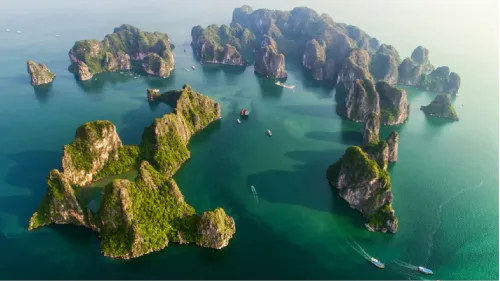



In Vietnam, searching for a single "perfect month" for the entire country is an illusion: stretching across more than 1,600 kilometers, our territory beats to the rhythm of three distinctly separate climate zones. For a complete first journey from North to South, March and April offer the most harmonious compromise. Yet the true secret to a successful trip lies in your personal priorities: trekking through Upper Tonkin, strolling through Hội An, or unwinding on Phú Quốc do not align on the very same calendar.
The right instinct is to select your two or three pivotal experiences first, and then build your itinerary around them. Here are our on-the-ground reference points to compare seasons with discernment and travel at the right pace.
The Essentials for Choosing Your Travel Dates
- For a complete first North-to-South journey: March and April deliver the smoothest compromise between the still-mild temperatures of Tonkin, the brightness of Central Vietnam, and the dry season in the South.
- To witness terraced rice fields: target September and October for the golden harvest across Upper Tonkin, or May–June for the mesmerizing "water mirrors" during the flooding season.
- For summer travel (July and August): focus on the historic and coastal Central region (Hội An, Đà Nẵng, Huế), where the sun shines generously while monsoon rains fall on the country's northern and southern extremities.
- For a seaside and relaxing stay: favor Phú Quốc from December to April, and the Central coastline from March to August.
Keep in mind: these reference points describe verified regional climate trends. They do not replace immediate pre-departure weather forecasts or the safety advisories of our local teams in the event of adverse weather.
Three Regions, Three Ways to Plan Your Journey
The North: Factoring in Altitude and Desired Landscapes
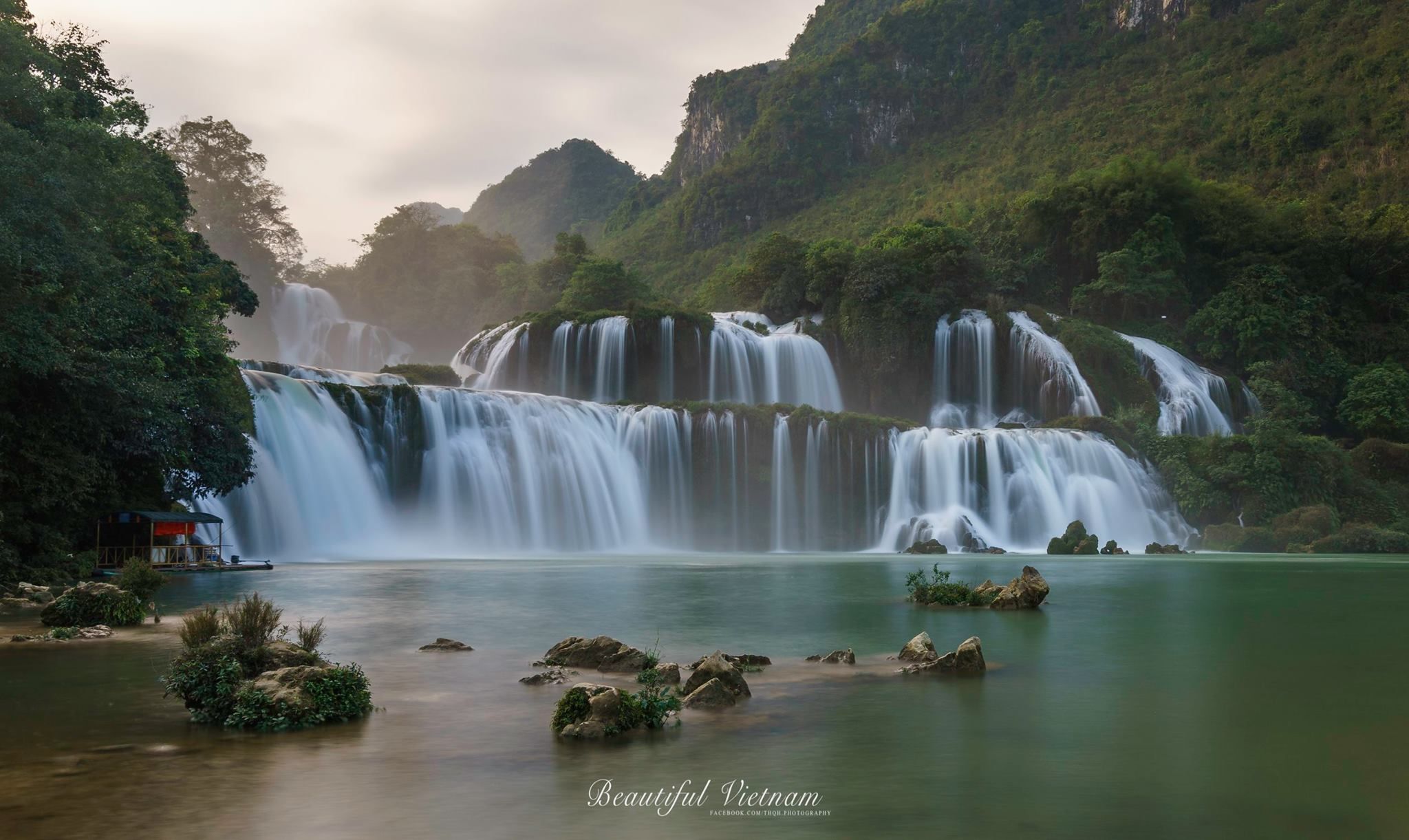
Photo to be replaced — 01 / Northern Rice Terraces: Plan a horizontal landscape photograph of terraced fields in Mù Cang Chải or Hoàng Su Phì, with confirmed location and month of shooting. Display natural field colors without over-saturation. Caption to complete: "[Location], photographed in [month]: landscapes evolve with the agricultural cycle."
Hanoi, Ninh Bình, Hạ Long Bay, and the mountain ranges of Upper Tonkin display very different faces, even just a few days apart. Winter (December to February) brings a cool, misty atmosphere over the lowlands, and biting cold at high altitude. A cruise among karst pillars remains a striking, romantic experience under the mist in this season, but should not be anticipated as a swimming holiday.
For Sapa and the highland mountain valleys, official Vietnam Tourism data particularly recommends April–May and September–October, while underscoring marked chill from November to March. If your focus is trekking, walking comfort depends just as much on elevation gain, trail conditions, and proper footwear as on the chosen month. A well-balanced itinerary with flexible stages will always adapt better to ground realities than an inflexible trek.
The rice cultivation cycle demands meticulous attention. Terraces sculpted in tender green, flooded plots mirroring clouds, or golden fields ripe for harvest correspond to very specific moments on the farming calendar. September and October are the prime harvest months, but this is not uniform across all valleys: Sapa, Mù Cang Chải, and Hoàng Su Phì do not ripen simultaneously and must be verified separately prior to departure. Once cutting is finished, the grandeur of the terrain remains intact, but the hillsides then reveal bare earth.
In the mountains, never rely solely on lowland weather forecasts: always pack a lightweight thermal layer for evenings and keep flexibility in your daily walking stages. Morning mist is never an obstacle; it is precisely what lends Tonkin's sculpted valleys their most dramatic depth.
Central Vietnam: Distinguishing Cultural Exploration from Beach Stays
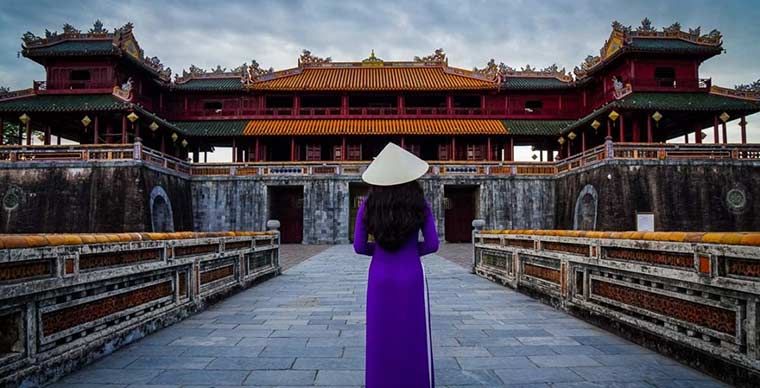
Photo to be replaced — 02 / Hội An in Spring: Plan a horizontal landscape photograph of the Hội An or An Bàng countryside, photographed between March and May with verified location. Avoid beach photos from another region. Caption to complete: "[Location], in [month]: a stopover combining discovery with seaside relaxation."
In Hội An, the period from March to May represents the golden window to combine timeworn alleys, countryside cycling, and relaxation along An Bàng beach. From June to August, summer brings brilliant sunshine, but the heat is dry and intense: cultural visits are best enjoyed in early morning light, leaving room for a shaded or coastal pause during the hottest afternoon hours.
Autumn calls for heightened vigilance. From mid-September through December, maritime weather disturbances and tropical low-pressure systems can bring torrential rains and rising waters along the Thu Bồn River, temporarily altering Hội An. This humidity can extend into January. January is therefore by no means a guarantee of sunny beach weather across Central Vietnam. Furthermore, Huế, Đà Nẵng, and Nha Trang each possess their own distinct microclimates.
This does not mean cultural heritage must be abandoned in autumn if your circuit is carefully guided. However, if swimming and unwinding by the sea form the heart of your trip, our recommendation is to steer your beach days toward the South (Phú Quốc) during those months.
In Hội An as in Huế, the secret to summer travel lies in tempo: wake with the gentle dawn light to savor the ancient quarter and royal citadels in quiet tranquility, then allow yourself a long shaded or seaside break during the peak heat of the afternoon.
The South: Tropical Warmth, Showers, and Sea Conditions
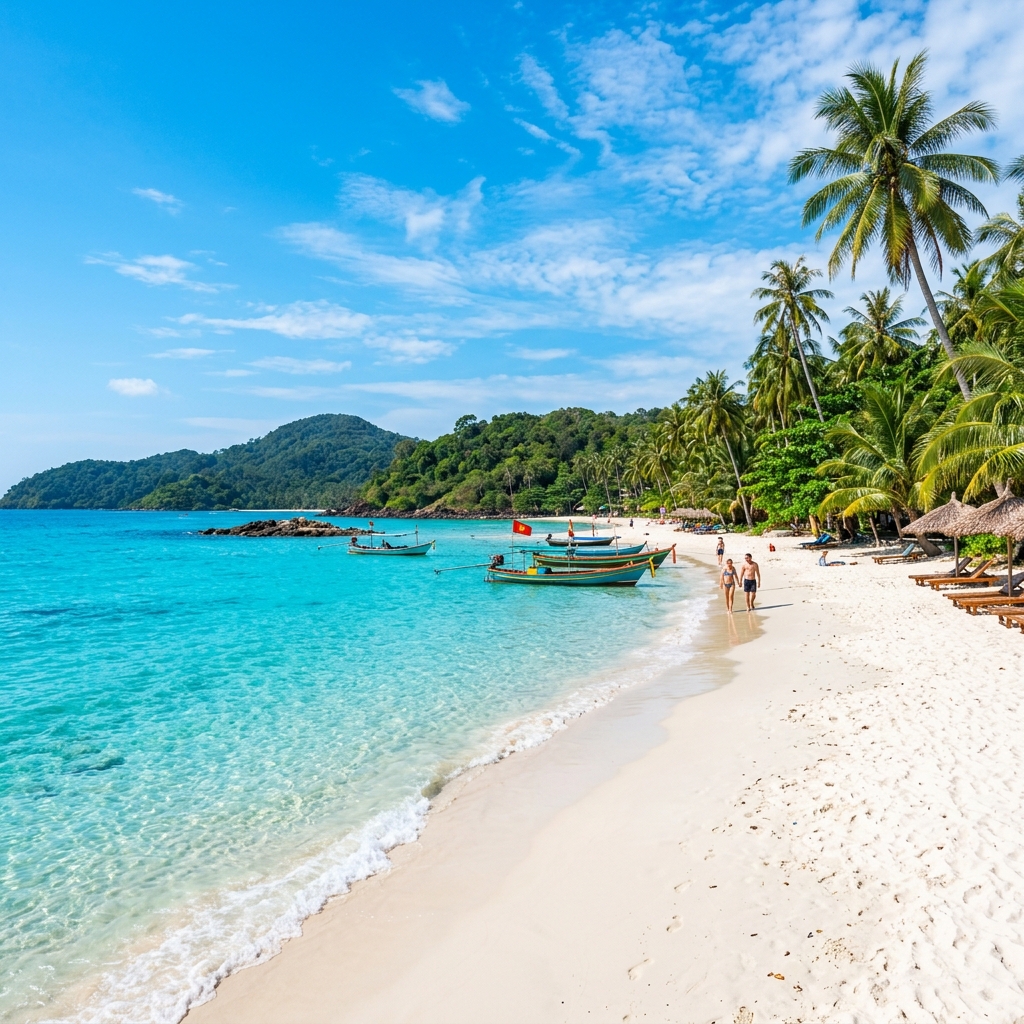
Photo to be replaced — 03 / Phú Quốc in Dry Season: Plan a horizontal photograph of a Phú Quốc beach, with verified location, month, and usage rights. Prefer a natural coastal view over a resort shot that might imply an included accommodation. Caption to complete: "[Beach], Phú Quốc, in [month]."
In Ho Chi Minh City and the Mekong Delta, warmth accompanies travel year-round. From December to April, the dry season offers ideal conditions for cruising lush arroyos. From May to November, monsoon rains take hold: often brief and bursting in late afternoon, they wash the air with exceptional freshness without shutting down the day—provided one knows how to pause under shelter for an iced coffee with condensed milk.
On Phú Quốc, the timing of your month is decisive for enjoying the coast. The window from November to March delivers calm, transparent waters, ideal for swimming and boat excursions. From July to September, westerly winds and rain agitate the sea and may limit ferry connections. It is maritime conditions far more than rain that dictate the pace.
Côn Đảo does not follow the exact same coastal schedule. Vietnam Tourism particularly notes strong winds possible in December and January that can complicate maritime crossings. In contrast, spring and summer reveal waters of sublime clarity. Each island must therefore be appraised with precision, without assuming that a uniform climate blankets the entire southern coastline.
Never book an island simply because it sits in the South: between the serene clarity of Phú Quốc from December to April and the bracing winter breezes of Côn Đảo, each shore follows its own maritime tempo. Match your beach extension to your true desire for pure relaxation or wild exploration.
When to Visit Vietnam: Month-by-Month Guide
Here is our decision calendar, drawn from field feedback and regional observations. It outlines key highlights and subtleties to anticipate for each month of the year:
- January — North: pack warm layers for cold and mist; do not prioritize swimming in the bay. Central: verify conditions in Huế and Hội An (lingering moisture still possible) before choosing a beach extension. South: an excellent option for ending in sunshine, keeping an eye on Tết holiday dates.
- February — North: allow leeway for chill and persistent drizzle (mưa phùn). Central: gradual clearing with brighter days. South: dry, warm, and very pleasant weather; compare availability around the Lunar New Year.
- March — One of the finest months for combining all three regions. Clear skies in Central and Southern Vietnam, mild spring warmth across the North. Travel activities harmonize effortlessly from one stage to the next.
- April — An ideal window for an extensive journey. In the South, temperatures climb, favoring morning visits. In the North, temperatures are delightful for walking and cruising.
- May — North: dramatic flooding of terraced fields (the "water mirrors" season). Central: generous sunshine and excellent beach conditions in Hội An. South: early afternoon showers, brief and refreshing.
- June — North: summer warmth with occasional localized thunderstorms. Central: glorious weather for a cultural and coastal combination. South: the lush green season is in full swing, ideal for the verdant waterways of the Mekong.
- July — For summer holidays, Central Vietnam (Huế, Đà Nẵng, Hội An) is the prime destination beneath brilliant sunshine. For the North and South, design a flexible program that easily accommodates tropical downpours.
- August — Similar summer pattern: abundant sunshine on Central beaches. In the North, landscapes and waterfalls reach peak grandeur; retain flexibility for boat cruises in case of weather advisories.
- September — North: climax of golden terraced rice fields and harvests across Mù Cang Chải and Hoàng Su Phì. Central: tail end of dry weather and onset of the wet season. South: showers steadily tapering off.
- October — North: splendid autumn in Hanoi and highland mountains, crisp and clear air. Central: heavy rainfall period, best avoided for beach-centric stays. South: gentle transition toward the dry season.
- November — A grand return of balance between North and South. Dry and sunny weather in Saigon and Phú Quốc; elegant crispness in the North. Central Vietnam gradually concludes its wet spell.
- December — The ideal season to escape European winter in the South and on Phú Quốc. The North wraps itself in atmospheric winter charm (the cozy character of Hanoi cafes). Remember to book early for year-end holidays.
Choosing by Travel Style, Not Just the Calendar
You Wish to Discover Vietnam from North to South
For a grand classic itinerary spanning all three regions, March, April, and November represent the most balanced windows. Travel direction (North to South or vice versa) is chosen based on international flights and desired conclusion: finishing gently along southern beaches or amid the serenity of northern bays.
You Are Traveling for Terraced Rice Fields or Trekking
Clarify your expectations: do you wish to behold water mirrors reflecting the sky (May–June), admire radiant valleys before the harvest (September–October), or simply immerse yourself in traditional villages? An experienced local guide knows how to adjust trails to the day's conditions, prioritizing safety and genuine encounters.
You Are Traveling with Family in July or August
There is absolutely no need to forego Vietnam simply because school holidays fall in peak summer. The key is anchoring the trip around Central Vietnam (Hội An, Huế, the shores of An Bàng and Đà Nẵng) which enjoys sunny weather, while maintaining a smooth rhythm: cultural visits during morning coolness, leisurely relaxation in the afternoon.
The Beach Is Your Top Priority
First choose your preferred coastal ambiance: the tropical island atmosphere of Phú Quốc (ideal December to April) or Central beaches lined with fishing villages (ideal March to August). Aligning your dates with the right coast ensures a serene seaside experience.
Tết, Budgets, and Weather Disruptions: Planning Ahead
Traveling During Tết (Lunar New Year)
The Lunar New Year is a time of rare emotional resonance: homes are adorned with kumquat trees and peach blossoms, and families gather in a spirit of renewal. It is a magnificent cultural experience, yet one that requires early transport bookings and settling for several days in a single stopover to experience festivities from within.
Traveling with Smaller Budgets or Fewer Crowds
Shoulder seasons (May–June and September–October) often offer welcome breathing room: iconic sites are quieter and accommodations more readily available. For peaceful travel, timing daily visits (early morning) and choosing intimate boutique stays matter just as much as the calendar month.
Planning a Genuine Plan B for Hạ Long Bay
In Hạ Long Bay or Lan Hạ Bay, maritime safety always takes precedence. In the event of storm alerts or adverse late-summer weather, port authorities may suspend sailings. Our role as bespoke travel planners is always to hold an elegant, immediate alternative: pivoting toward the terrestrial enchantment of Ninh Bình (the inland Hạ Long Bay) or exploring historic artisanal villages in the Red River Delta.
Practical Questions Before Booking
Can One Travel During the Rainy Season?
Absolutely. Under the tropics, the monsoon usually takes the form of heavy yet brief late-afternoon downpours. Nature unfolds with vibrant vitality and temperatures drop pleasantly. With a thoughtfully crafted itinerary, rain never spoils the journey: it is an organic part of Southeast Asia's living charm.
Can You Swim in Hạ Long Bay During Winter?
In December, January, and February, water in the Gulf of Tonkin averages around 18°C to 20°C and the air can be crisp. Kayak outings remain magical through morning mist, but for genuine leisure swimming, save aquatic pursuits for the warm tropical seas of Phú Quốc.
Do Mosquitoes Only Bite in the Evening?
No. In accordance with international public health recommendations from the CDC, mosquitoes transmitting dengue fever primarily bite during daytime hours. It is therefore recommended to apply effective skin repellents (based on DEET or Picaridin), wear loose-fitting, light-colored clothing covering arms and legs, and stay in air-conditioned or mosquito-netted accommodations in both cities and rural areas.
What Should You Pack in Your Suitcase?
The golden rule is layering (the "onion system"). Lightweight, breathable cottons and linens for tropical days; a windbreaker jacket and light fleece if exploring the North in winter or ascending highland elevations; a pair of grippy walking shoes and comfortable water-friendly sandals.
Should You Cancel If Weather Apps Show Rain?
By no means! Generalist weather apps detect ambient tropical humidity and display thunderstorm icons even when a day is largely sunny with a brief 30-minute twilight shower. Rely on official advisories and daily on-the-ground updates from our local team.
Let Us Craft Your Journey Around Your Travel Dates
You do not need to wait until you find a "perfect month" before contacting us. Share your potential travel dates, intended journey length, and what ignites your imagination: terraced rice fields, temple majesty, street gastronomy, or coastal gentleness. Our artisan calling is to bring your desires into dialogue with terrain subtleties to compose a journey truly made for you.
Browse our tailor-made Vietnam tours for inspiration, or reach out to us directly for a personalized travel proposal.
Warmest regards,
Thúy Hằng Bùi — Co-founder of Sensations Vietnam
Field references and climate sources: Climate data consolidated from Vietnam Tourism, regional official authorities (Sapa, Hội An, Phú Quốc, Côn Đảo) and health guidelines from the CDC. Updated for the 2026–2027 travel season.

Thúy Hằng Bùi
Specializing in climate harmonies and bespoke travel rhythms across Vietnam, Hằng designs itineraries that prioritize natural light, authentic encounters, and the right pace.
Specializing in climate harmonies and bespoke travel rhythms across Vietnam, Hằng designs itineraries that prioritize natural light, authentic encounters, and the right pace.
Discover her world